


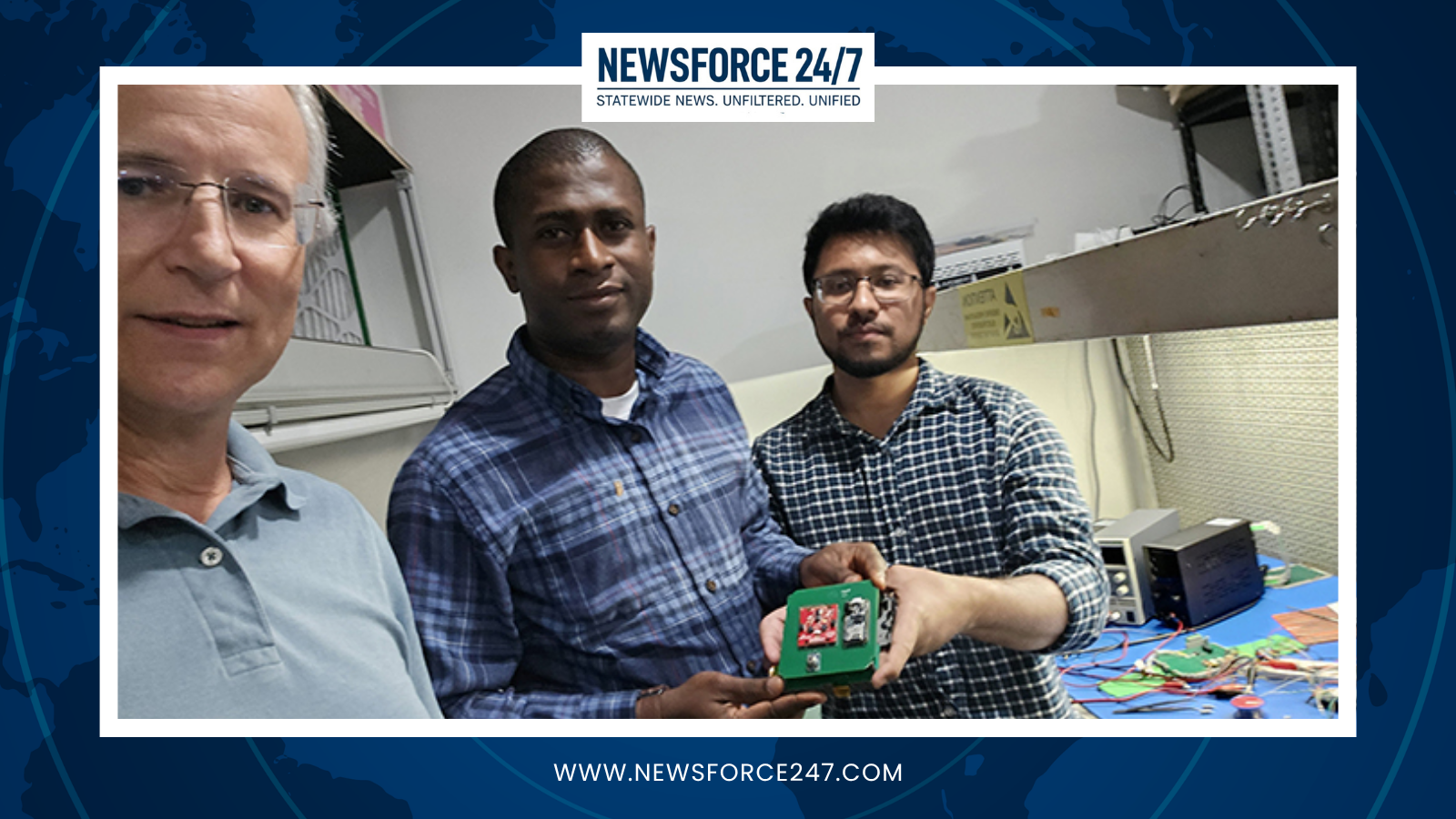

TOLEDO, Ohio — A satellite designed and built in northwest Ohio is set to lift off this weekend aboard a SpaceX rocket, marking a milestone for the University of Toledo and three area high schools that contributed to the project.
The small “rocket-built” satellite, a CubeSat designed primarily for educational research, will launch Sunday, March 29, as part of SpaceX’s Transporter-16 rideshare mission from Cape Canaveral, Florida. Students and faculty from the University of Toledo’s College of Engineering collaborated with teams from Toledo Technology Academy, Sylvania Southview High School, and St. Francis de Sales School to design, construct, and test the miniature spacecraft over the past two years.

“This mission gives our students a true hands-on experience with aerospace engineering — from concept and coding to launch,” said Dr. Amanda Keller, an associate professor of electrical engineering and faculty lead on the project. “They’re not just learning about satellites; they’re putting one in orbit.”
The CubeSat, roughly the size of a loaf of bread, will carry sensors to collect atmospheric data and test new communication technologies designed by student teams. Once deployed from the Falcon 9 rocket in low-Earth orbit, the satellite will begin transmitting telemetry data back to Toledo, where university and high school students will monitor its systems for months to come.

For the high school participants, the launch represents a rare opportunity to take part in a professional space mission. “Seeing something you worked on go into space — that’s life-changing,” said Sylvania Southview senior Ethan Moore, one of the student engineers.
SpaceX’s Transporter-16 mission will carry dozens of small satellites for educational, scientific, and commercial clients worldwide. Liftoff is scheduled for 10:25 a.m. EDT Sunday, weather permitting, and will be streamed live on SpaceX’s website.
