


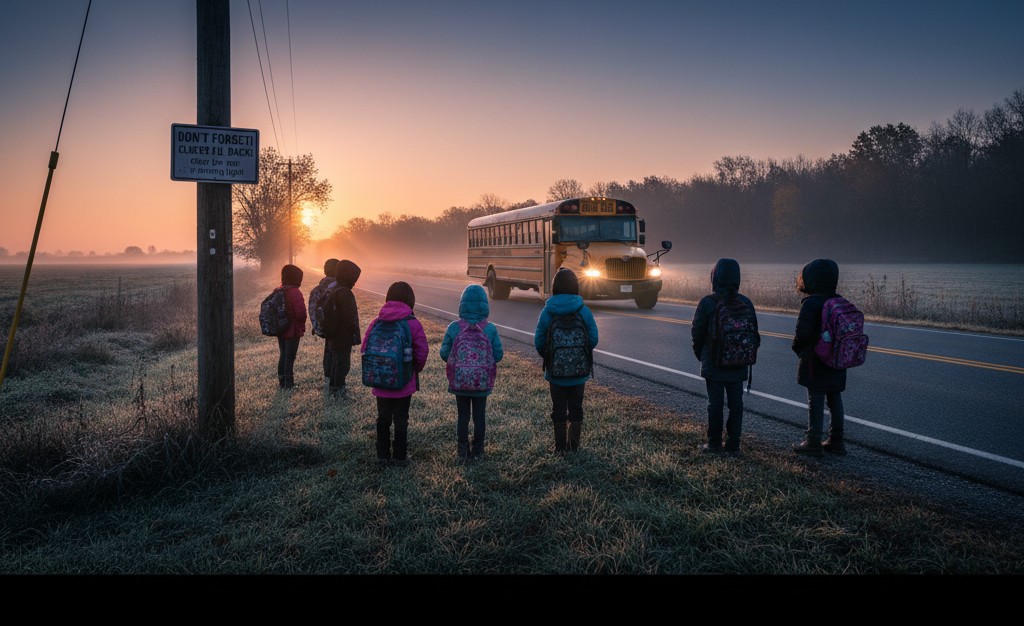
The most noticeable effect of the time change on school transportation is the altered balance of daylight, particularly during the return to Standard Time in the fall.
The Double-Edged Sword of Daylight

When clocks “fall back” to Standard Time in November, school districts temporarily gain an hour of precious morning light. This is widely considered a significant benefit for student safety.
* Increased Safety in the Morning: With an earlier sunrise, students, particularly those who walk or wait at early-morning bus stops, are no longer in complete darkness. As one transportation official noted, the extra daylight makes it “safer for students walking and taking the bus to schools.”
* Safety Concerns on the “Spring Forward”: Conversely, when DST begins in March, the sudden shift pushes the sunrise later, plunging early-morning routes back into darkness for several weeks. This can increase safety risks for younger students waiting for the bus before dawn.

This inherent conflict—trading morning light for evening light—is at the heart of the national and state debate over making DST or Standard Time permanent. Proponents of permanent Standard Time in Ohio often cite the safety of school children in the morning as a primary concern.
Transportation Logistics and the Driver Crisis

Beyond the light conditions, the time change also subtly impacts the intricate logistics of school bus routing, which is already stretched thin across Ohio. Many districts operate “triple-routed” systems, where a single bus and driver cover three different routes—elementary, middle, and high school—to maximize efficiency.
The loss of an hour’s sleep during the “spring forward” transition has been cited nationally as contributing to general fatigue, which, for a profession already struggling with severe workforce shortages, is an added complication.

Moreover, school transportation departments are already grappling with monumental, systemic challenges that dwarf the biannual time change:
* Severe Driver Shortage: Districts across the state are operating short-handed, forcing transportation supervisors and even mechanics to drive routes. In some areas, the shortage has been so acute that bus service for high school students has been canceled entirely.
* Cost and Routing Challenges: Discussions around later school start times, which are often recommended for adolescent health, consistently run into logistical and financial roadblocks. Transportation directors have expressed concerns that shifting bell times to accommodate more morning daylight would:
* Increase Overlap: Later start times could cause multi-tiered routes to overlap, requiring the purchase of more buses and the hiring of more staff—a costly and, given the driver shortage, nearly “impossible” feat.
* Late Student Dismissals: In large, rural districts, later dismissal times could mean students, particularly those involved in after-school activities, would not get home until 6:00 p.m. or later.
In the end, while the time shift itself doesn’t fundamentally break the system, it heightens safety concerns in the mornings for a workforce already at capacity. For Ohio’s transportation directors, managing the twice-yearly change is just one more puzzle piece in the much larger and persistent challenge of getting students to school safely, reliably, and on time.