



What changes Feb. 1

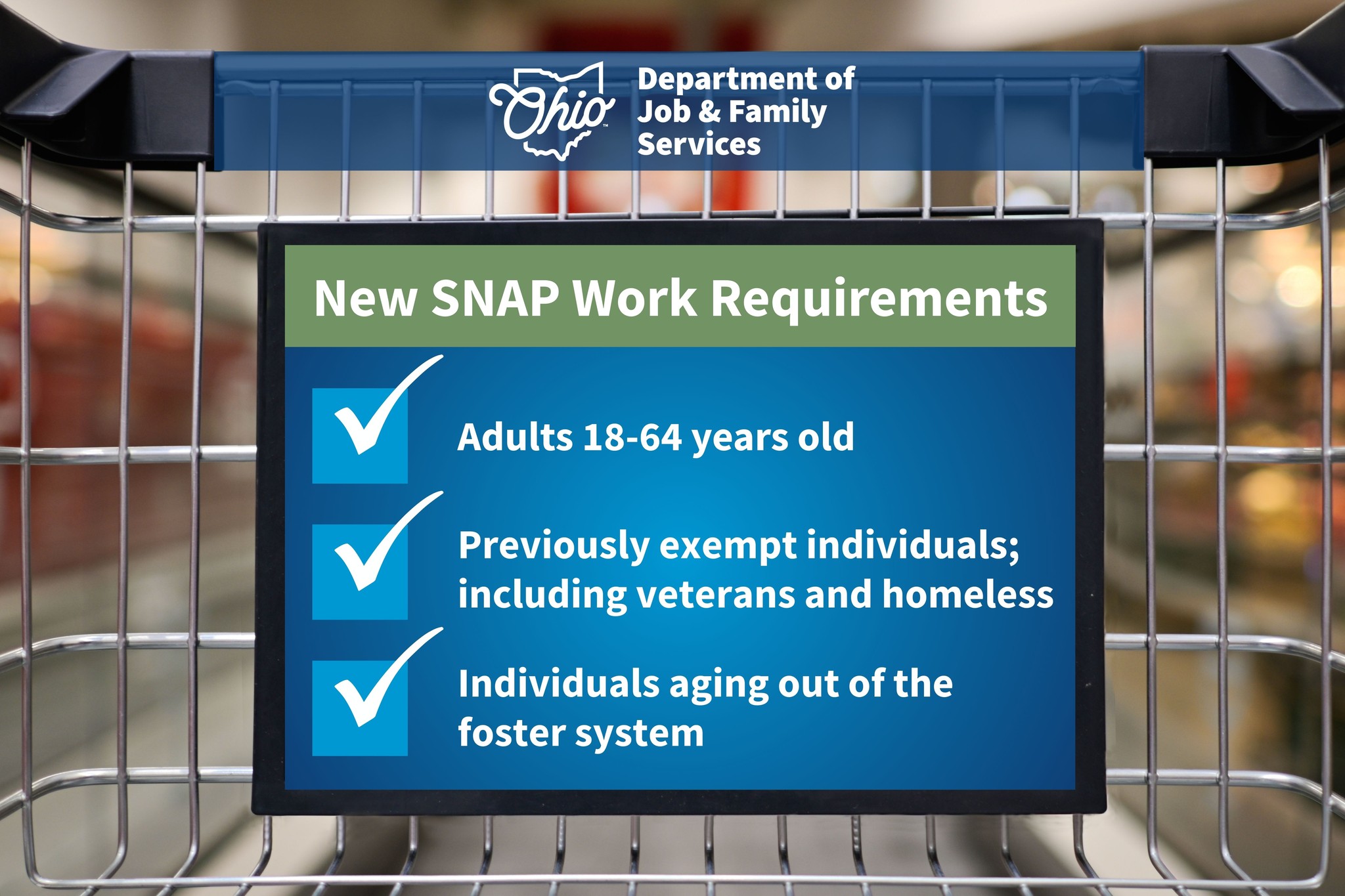
Under new provisions in the federal “One Big Beautiful Bill Act,” the age range for strict Supplemental Nutrition Assistance Program (SNAP) work requirements is expanding, while long‑standing exemptions are shrinking. Adults ages 18 to 64 who are considered able‑bodied and don’t live with a child under 14 will now need to document they work, volunteer, or participate in job training for at least 80 hours per month to stay eligible for food assistance. Those who don’t comply can only receive benefits for up to three months in a three‑year period.
Previously, Ohio adults between 55 and 64 were exempt from those rules. Starting Feb. 1, they’ll have to meet the same standards as younger adults unless they qualify for an exemption. Parents whose youngest child is 14 or older will also newly fall under work‑rule limits, ending a protection that had previously covered most parents with children under 18.

Who this affects in Ohio
Ohio’s Department of Job and Family Services, which oversees SNAP, estimates more than 600,000 adults in the state could be subject to the new federal rules—many of whom live in rural or Appalachian counties where job opportunities and reliable transportation remain limited.

Groups most affected include older adults nearing retirement age, veterans, single parents of teenagers, and people without stable housing. Many of those individuals already face barriers to steady employment such as age discrimination, limited childcare, or health conditions not severe enough to qualify for disability benefits.
Advocates say these changes will hit working families and older Ohioans especially hard. “We expect a rise in food insecurity, particularly in smaller communities where jobs are scarce and service agencies are stretched thin,” said Lisa Hamler‑Fugitt, director of the Ohio Association of Foodbanks. Local food pantries are already preparing for increased demand.

Medicaid work rules coming next
The same federal budget law also adds work requirements for many low‑income adults covered under Medicaid, though those changes take effect later. The U.S. Department of Health and Human Services will require adults in states like Ohio—where Medicaid was expanded under the Affordable Care Act—to complete at least 80 hours per month of work or community service to maintain eligibility.
While states can choose to implement the rules early, the nationwide start date is set for Jan. 1, 2027. Health policy researchers warn that when other states previously tested Medicaid work requirements, many people lost coverage due to paperwork or reporting issues rather than unemployment. That’s a particular concern in Ohio, where roughly 3 million residents rely on Medicaid.
Divided reaction in Ohio
Supporters of the new rules, including several Ohio Republicans, contend they will encourage employment and reduce dependency on government aid. Gov. Mike DeWine’s administration has said it will work to align state systems with the federal mandates while “ensuring those who are eligible don’t fall through the cracks.”
Critics, including anti‑poverty organizations and Democratic lawmakers, counter that the measures amount to cuts in benefits rather than meaningful job programs. They point to Ohio’s existing workforce shortages, lack of affordable childcare, and uneven access to transportation as structural obstacles that make steady work hard to maintain.
What Ohio SNAP recipients should do now
ODJFS and local county job and family service offices are urging SNAP recipients aged 55 to 64 and parents of children aged 14 or older to review any notices or text alerts about eligibility changes. Those already working close to 20 hours a week should begin collecting pay stubs or verification documents to meet the new reporting rules.
Recipients with health issues or caregiving duties should contact their county caseworker immediately to ask about exemptions. Nonprofits like the Ohio Association of Foodbanks and Legal Aid Society of Columbus say they’re bracing for a surge in calls from residents confused about overlapping SNAP and Medicaid requirements.
The SNAP rule changes take effect this Saturday, Feb. 1. Medicaid work requirements will follow in 2027—but state preparations and notices could begin much sooner.