


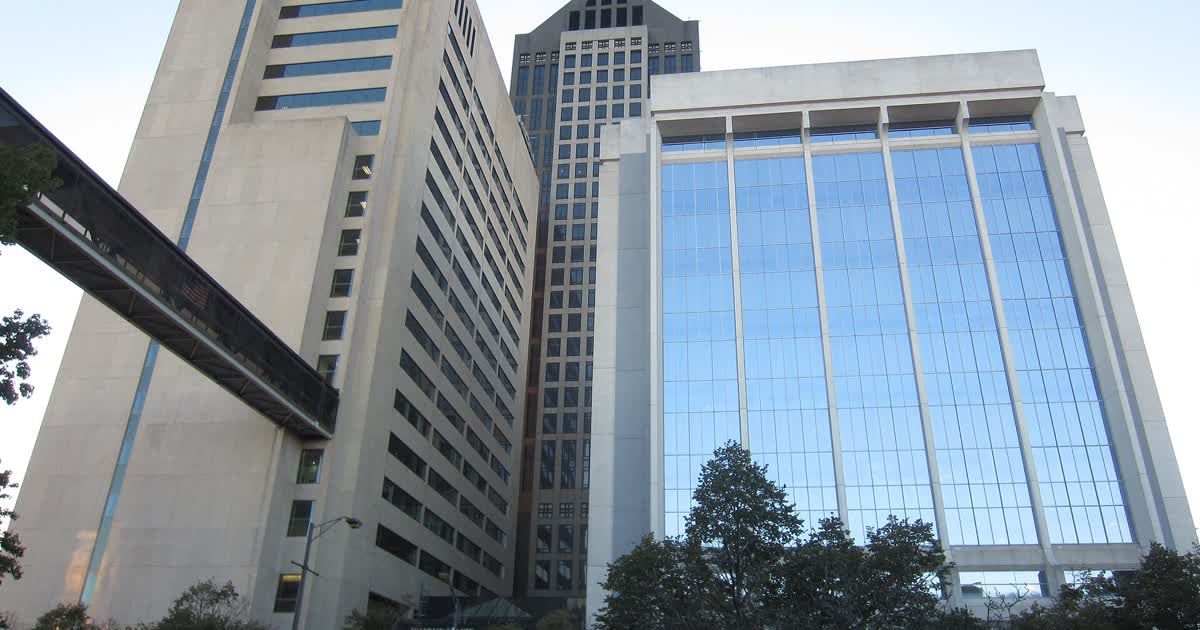
COLUMBUS — Columbus City Council President Shannon Hardin is calling for a safety review of the aging Franklin County Municipal Courthouse and has announced a Nov. 9 council hearing to be held at the building itself, escalating a public fight with Mayor Andrew Ginther over how the city has handled the 47-year-old courthouse’s deteriorating condition.
The building has made headlines in recent months for fire code violations, elevator breakdowns and security concerns, and judges at one point closed the courthouse temporarily while part of its fire suppression system was offline. The dispute sharpened in July, when Ginther announced the city could not afford to build a new courthouse — a $335 million project in the works since 2018 that Columbus voters had supported with bond levies twice — and would instead spend $260 million to renovate the existing building.

In his Oct. 16 announcement, Hardin said court officials and staff feel misled and frustrated, arguing the city could have been making meaningful improvements to the building for years with better fiscal planning and earlier action. Hardin said he toured the Municipal Court last year and again two weeks ago with Administrative Judge Jessica D’Varga, and that he was stunned last year by the building’s poor condition — and shocked two weeks ago by how much further it had declined.
“We owe a safe and accessible place to access justice to the half a million residents who come through its doors every year, and to the hundreds of city employees who work there,” Hardin said. “With the Mayor’s cancellation of the courthouse project, we need answers about a realistic path forward. Columbus cannot allow a dangerous, deteriorating courthouse to reflect how we value our workers, our residents, or our city. We’re better than that.”

The clash carries an electoral edge: Hardin and Ginther are political rivals in the 2027 mayoral race, and the courthouse has become an early flashpoint over competence, spending and the condition of the city’s basic civic infrastructure. The mayor’s office has defended the renovation decision as the fiscally responsible option after construction costs outgrew the budget voters approved.
For the people who use the building every day — defendants, victims, jurors, attorneys and the hundreds of employees who staff its courtrooms — the stakes are practical rather than political. A courthouse that closes unexpectedly, loses elevator service or struggles with fire-safety systems disrupts cases, delays hearings and undermines confidence that the justice system is being run safely.

The Nov. 9 hearing, held inside the courthouse itself, is meant to put those conditions on the record in the place where they are felt. Council members are expected to hear from court officials and city staff about the building’s current state, the renovation plan and what interim safety steps can be taken while the larger project is designed. What comes out of that hearing will shape whether Columbus doubles down on renovating the building it has — or reopens a debate it thought it had settled in July.