


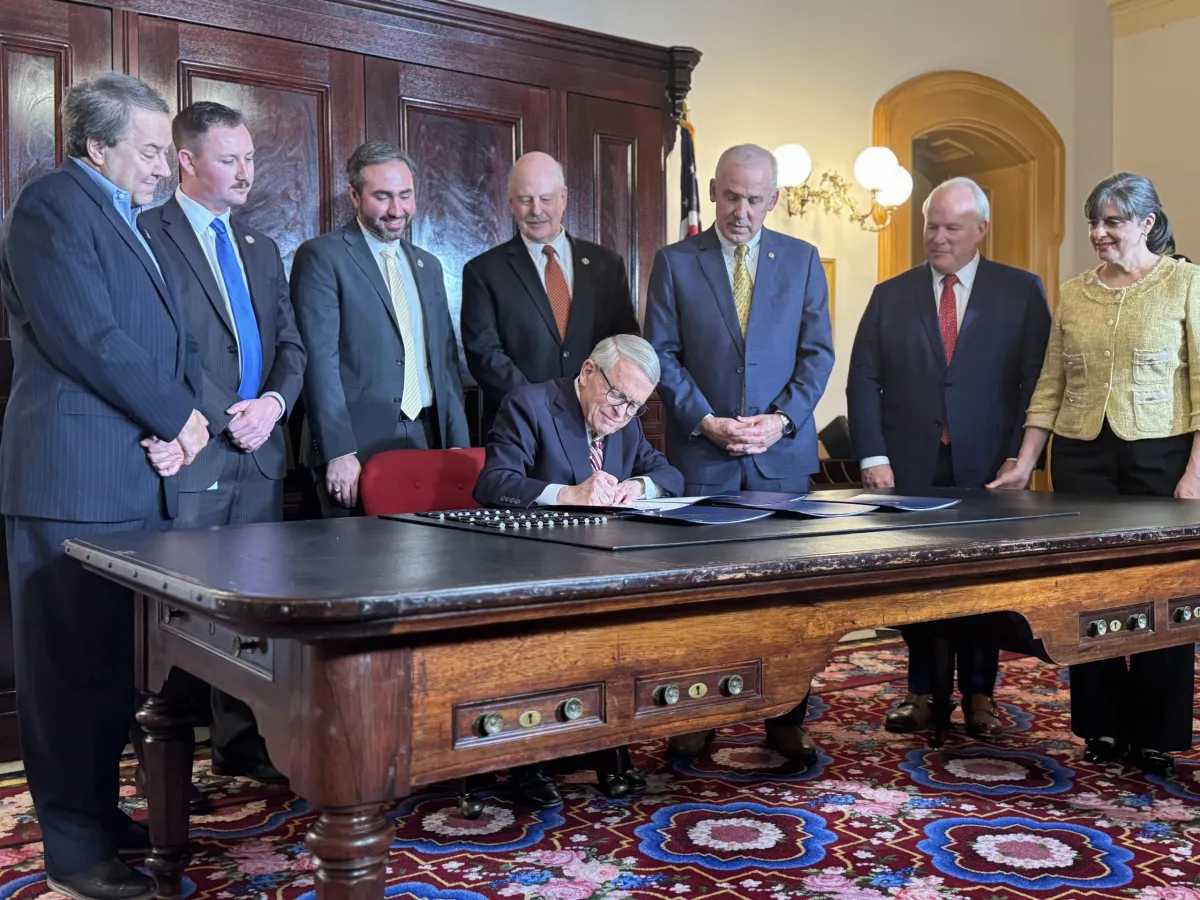
The plan includes five different bills — House Bills 124, 129, 186, 309 and 335 — and represents the biggest update to Ohio’s property tax system in decades.

“People have been telling us their property taxes are getting out of control,” DeWine said in a statement. “This is about creating a fairer, more stable system that keeps families from being priced out of their homes.”
Stopping Taxes From Rising Too Fast

In many parts of Ohio, home values have jumped sharply since the pandemic, and that’s led to bigger tax bills for homeowners. The new laws will put a lid on how much taxes can automatically rise when property values increase.
A key part of the plan is something called an “inflation cap credit.” That’s a fancy way of saying that if property taxes in an area have gone up faster than inflation since 2022, the state will step in to bring those hikes back in line with rising costs.

Helping Schools Handle the Changes
Because schools rely heavily on local property taxes, the state is also sending out help to make sure they don’t lose out on funding. Lawmakers set aside $410 million in one-time money to help school districts adjust while the new rules take effect.

“We wanted to make sure schools aren’t left holding the bag,” said Senate President Matt Huffman. “This is about balance — protecting homeowners and keeping classrooms funded.”
When It All Kicks In
The new system will start to roll out in 2026, with all the changes expected to be in full effect by 2028. State officials say they’ll keep watch to make sure the process runs smoothly and that communities get the relief they’ve been promised.
For many Ohio homeowners, the overhaul can’t come soon enough.
“Every year my taxes went up, and I couldn’t figure out why,” said Linda Carpenter, a homeowner in Franklin County. “It’s about time the state did something to make it fair.”