


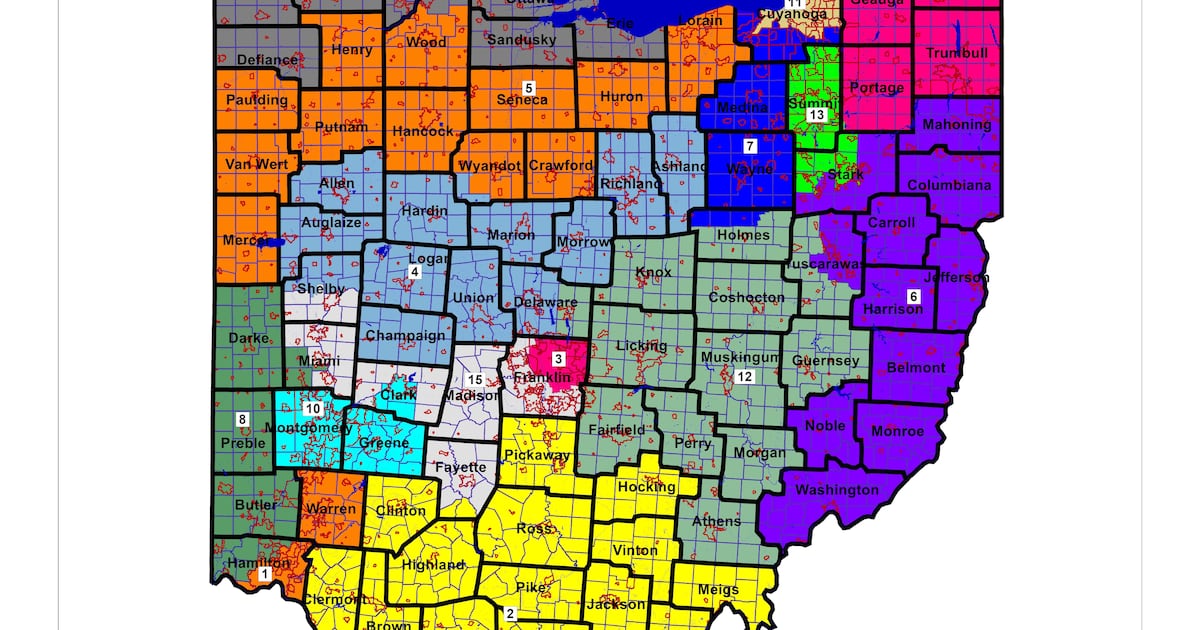
GOP Gains Expected

While the map received unanimous approval, its political implications are clear: the new lines are generally viewed as a major victory for the Republican Party. Analysts suggest the map creates an environment that could allow the GOP to secure an advantage in as many as 12 of Ohio’s 15 U.S. House seats.
The bipartisan agreement hinged on a crucial trade-off. Republicans agreed to abandon earlier proposals for a significantly more aggressive map that would have cemented an even larger GOP-to-Democrat ratio. In exchange, Democrats agreed to support the current map and drop their plans to pursue a statewide ballot measure that would have challenged or blocked the new districts. Democratic leaders stated that agreeing to the current map was a necessary move to prevent a far more partisan outcome.

Kaptur’s District Shifts Right
The new lines drew immediate criticism from some state Democrats, most notably U.S. Rep. Marcy Kaptur (D-Toledo). Kaptur, the longest-serving woman in U.S. House history, voiced her strong disapproval, pointing out that her Toledo-area district has been redrawn to lean more decisively Republican.

”Ohio voters have consistently called for fair representation and transparency,” Kaptur said in a statement. “Our democracy works best when voters choose their leaders, not when politicians choose their voters. This new map diminishes our state’s stature and ignores what the people demanded.”
Under the newly approved configuration, Rep. Kaptur faces a significantly tougher path to re-election, testing the power of incumbency in one of the state’s most closely watched swing regions.

What’s Next?
The approved map will be in effect for the 2026 primary and general elections and will remain in place through 2031 unless struck down by the courts. While the bipartisan nature of the vote may serve to shield it from some legal challenges, the door remains open for lawsuits to be filed in both state and federal courts.