


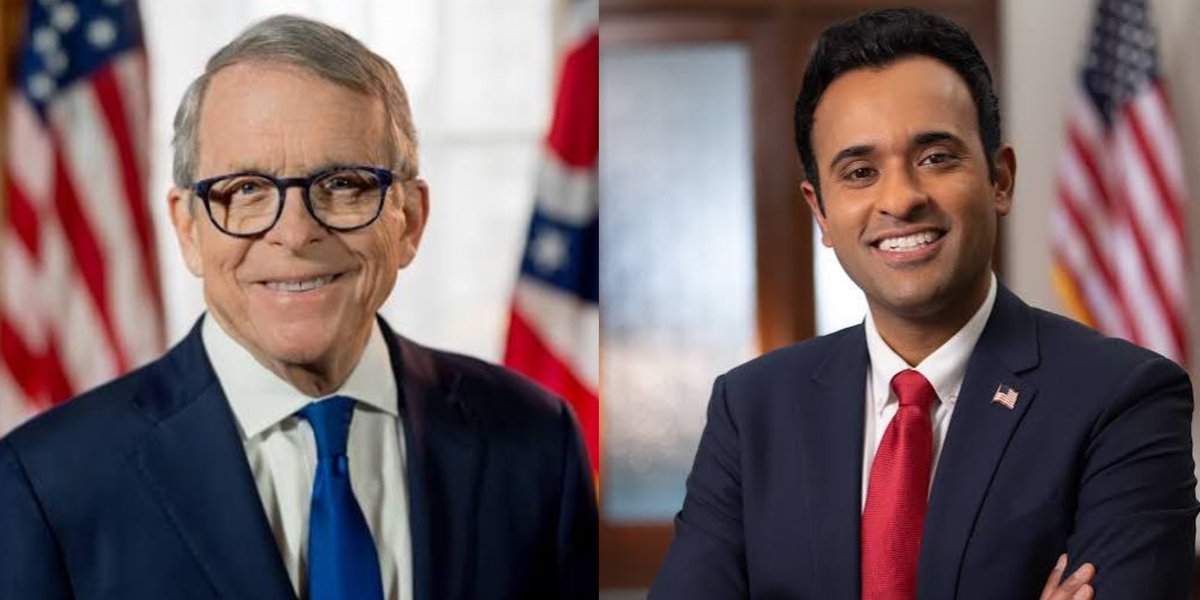
DeWine’s endorsement

DeWine announced his endorsement shortly after Ramaswamy confirmed McColley as his pick for lieutenant governor, framing the duo as a “dynamic ticket” poised to keep Ohio’s economic momentum going. He praised Ramaswamy as a candidate who understands Ohio’s appeal as a place to “build a business, raise a family, and pursue your vision of the American dream,” language that aligns the outgoing governor with the pro-growth message at the center of Ramaswamy’s campaign.
The outgoing governor highlighted the decision on a running mate as “the first important decision any Governor makes,” signaling that McColley’s selection helped seal his support after months of staying neutral in the emerging Republican field. DeWine had previously indicated he would ultimately back the GOP nominee but waited to endorse until he said he was comfortable with both Ramaswamy’s positions and his choice for lieutenant governor.

Praise for McColley’s leadership
In endorsing the ticket, DeWine singled out McColley’s tenure as Senate president, calling him a “strong leader” respected by members of the General Assembly. McColley, first elected to the Ohio House in 2014 and elevated to the Senate in 2017, took over the chamber’s top post in 2025, giving him deep experience with the state’s legislative machinery as he joins the statewide ticket.

DeWine’s statement emphasized that McColley “knows Ohio” and “brings geographical balance to the ticket,” a nod to the longstanding Ohio political strategy of pairing candidates from different regions to appeal to voters across the state. By contrasting Ramaswamy’s Cincinnati roots with McColley’s base in northwest Ohio, Republicans are signaling that they see regional diversity as a strategic asset in what is expected to be a competitive general election.
Geographic and political balance

The geographic calculation behind the pairing reflects a broader effort by Republicans to solidify support beyond traditional strongholds and appeal to both urban and rural voters. Ramaswamy, a Cincinnati native and high-profile businessman, brings name recognition and fundraising power, while McColley’s ties to the Statehouse and to communities outside the state’s largest metro areas are seen as complementary strengths.
DeWine’s framing of the ticket as balanced comes as both parties assemble slates designed to broaden their electoral coalitions; Democrat Amy Acton, for example, has tapped former Ohio Democratic Party chair David Pepper as her running mate, emphasizing her own version of experience and regional reach. The contrast sets up a race in which both tickets pair an outsider or reform message with a running mate steeped in political and institutional knowledge.
Stakes in the 2026 governor’s race
The endorsement underscores how much weight DeWine and other Republicans place on continuity in economic development after years of courting major business projects to the state. DeWine argued that Ramaswamy is best positioned to “keep the momentum going,” suggesting that voters face a choice between preserving the current pro-business direction and shifting toward Democratic proposals centered on affordability and social investment.
Early polling has suggested a competitive contest between Ramaswamy and Acton, with surveys in late 2025 showing the two effectively within the margin of error. With DeWine’s backing now formalized and McColley officially on the ticket, Republicans are hoping to consolidate the party’s base while leveraging the outgoing governor’s popularity to sway undecided voters ahead of a high-stakes 2026 showdown.