



CLEVELAND — Hospitals across Northeast Ohio are turning to artificial intelligence to speed up diagnostic imaging, cut MRI wait times, and help radiologists pinpoint urgent cases faster.

The Cleveland Clinic, University Hospitals, and Summa Health are among those expanding their use of AI-driven software that analyzes CT and MRI scans in real time. The technology, officials say, is already helping clinicians identify abnormalities—such as strokes, internal bleeding, and tumors—within minutes instead of hours.
Dr. Susan Minter, chair of radiology at the Cleveland Clinic, said AI tools are proving especially valuable in high-volume settings where hundreds of scans come through daily. “These algorithms don’t replace radiologists—they help us focus on patients who need immediate attention,” she said. “That can translate to quicker treatment and, in some cases, better outcomes.”

At University Hospitals, new imaging programs use AI to enhance image quality and shorten scanning sessions. The system automatically adjusts imaging sequences, allowing radiologists to capture clearer data in less time. Hospital leaders say that can reduce how long patients spend inside MRI machines—sometimes by as much as 30 percent.
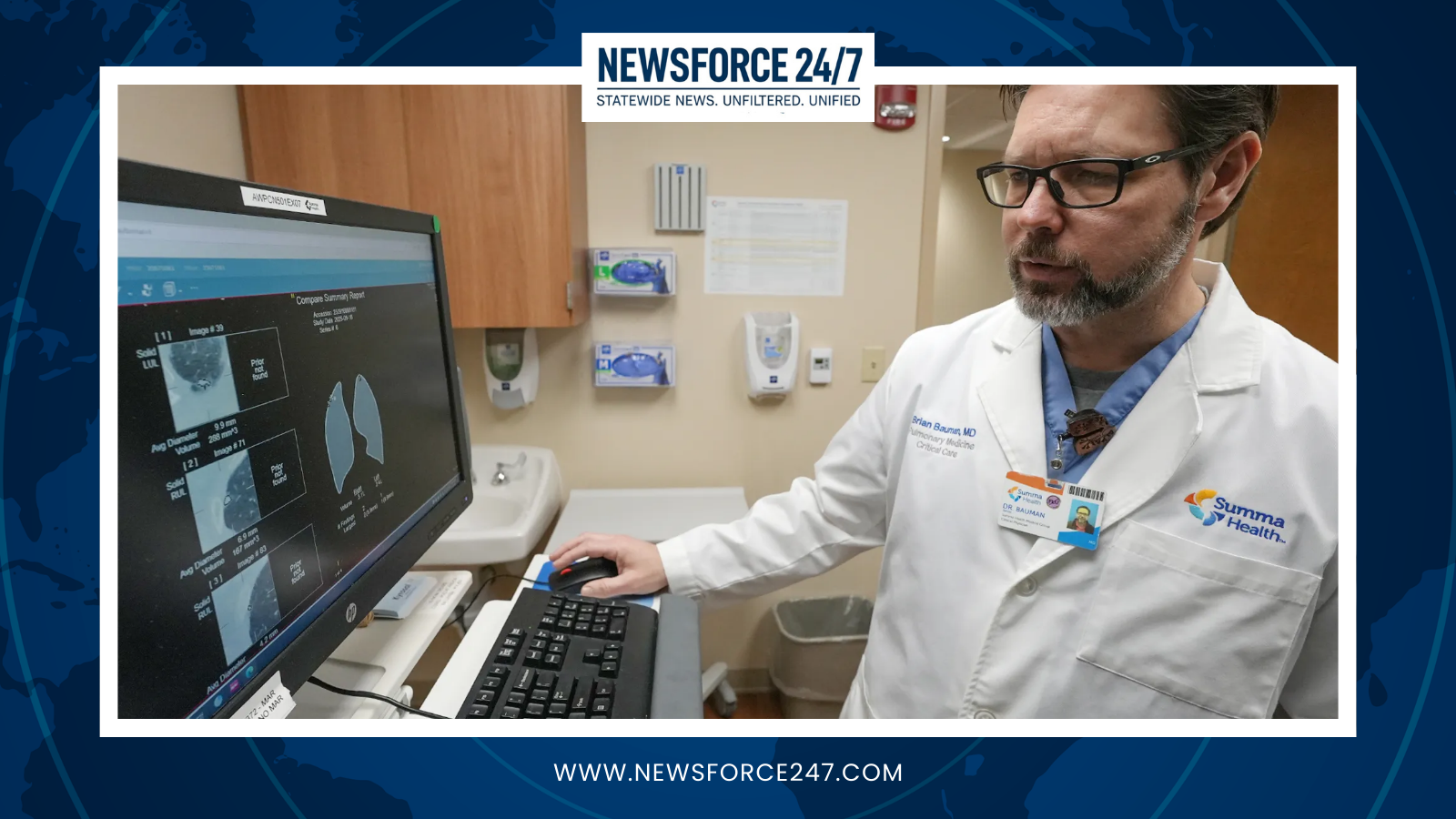
Summa Health in Akron has deployed similar technology in its emergency departments. Radiologists there say AI triage alerts can flag critical cases like brain hemorrhages before a human reader even opens the file.

While the technology is gaining traction, experts caution it’s not a substitute for medical judgment. “AI gives us a faster first look, but human oversight remains essential,” said Dr. James Lawrie, a neuroradiologist at University Hospitals. “We verify every AI finding before it reaches the care team.”
Industry analysts expect AI integration in radiology to accelerate nationwide. The U.S. Food and Drug Administration has already cleared more than 500 AI-enabled medical devices, many aimed at imaging.

As the tools evolve, hospital systems in Northeast Ohio view them as a way to manage growing patient volumes, ease clinician workloads, and improve the pace of care.
“AI won’t replace radiologists,” Minter added. “It’s helping us be better, faster, and more precise at what we already do best—diagnosing and treating patients.”