


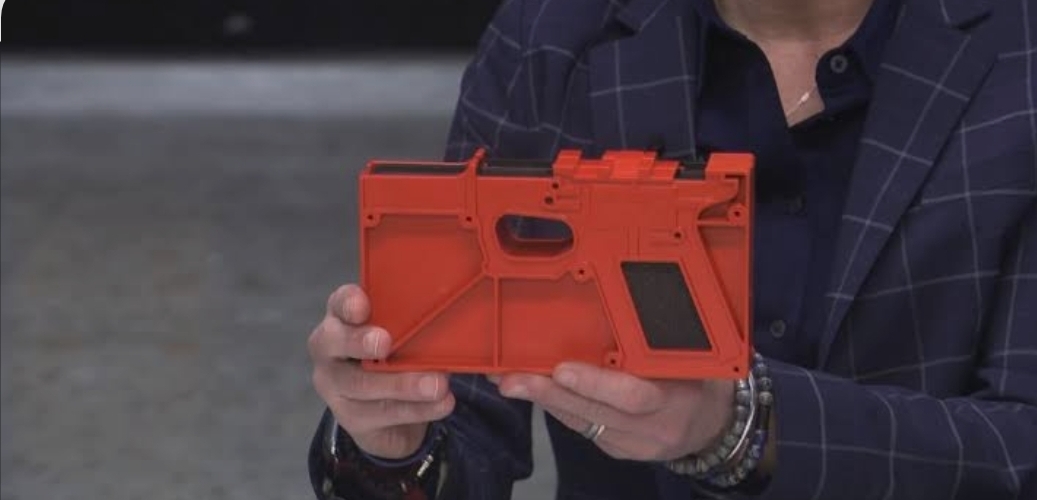
According to the Montgomery County Sheriff’s Office, investigators discovered the weapon while executing a search warrant connected to an ongoing homicide case earlier this week. The firearm, which bore no serial number, is believed to have been assembled using a combination of 3D‑printed components and commercially available parts, making it nearly impossible to trace through conventional law‑enforcement databases.

Detectives stated that the weapon appeared to be fully operational. “This is the latest example of how technological advances are complicating our ability to track and trace firearms used in crimes,” said a sheriff’s office spokesperson. “Without serial numbers or manufacturing records, ghost guns represent a growing challenge for police investigations.”
Ghost guns—firearms that can be made from kits or 3D printers without serial numbers—have surged in popularity nationwide over the past five years. Federal statistics show a sharp increase in the number of these weapons recovered at crime scenes. In many cases, officials say, they are used by individuals who would otherwise be prohibited from owning guns.

Local authorities are working with the Bureau of Alcohol, Tobacco, Firearms and Explosives (ATF) to analyze the weapon’s components and trace any materials that could lead investigators to its origin. The murder investigation remains ongoing, and officials have not released the identity of the suspect or victim pending next‑of‑kin notification.
Community leaders and gun‑safety advocates have called for renewed attention to the regulation of ghost guns, citing a growing threat to public safety. Lawmakers in several states, including Ohio, have proposed enhanced background‑check requirements and manufacturing restrictions aimed at curbing the spread of untraceable weapons.

“This discovery underscores an urgent need to address the evolving nature of firearm access,” said one local advocate. “As technology advances, so must our ability to ensure accountability and safety.”