


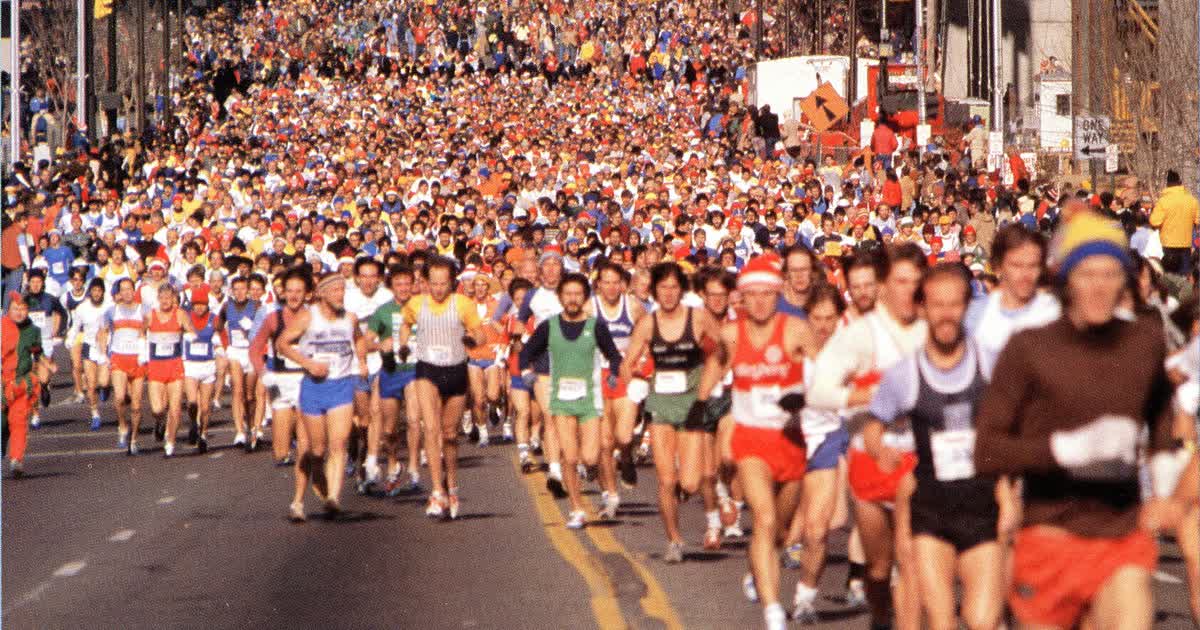
COLUMBUS — Nick Doud of Bloomington, Illinois, won the men’s race in 2 hours, 15 minutes, 8 seconds, and Ashton Swinford of Hudson, Ohio, won the women’s race in 2:38:05 on Sunday morning, leading more than 15,000 athletes through the 46th Nationwide Children’s Hospital Columbus Marathon and the 20th running of its half-marathon.
The field came from 49 states, Washington, D.C., Puerto Rico and 15 countries, according to organizers, and it moved through downtown and the neighborhoods behind more than 1,700 volunteers and more than 40 bands, DJs and other entertainers stationed along the course. For Doud, Columbus is a stepping stone: he said he has been training since the summer and is preparing for the Marathon Project in Arizona in December.

He credited the patients honored at each mile marker with keeping him going when the race turned hard. “Everyone says the race starts at mile 20. They’re not wrong,” Doud said. “About two miles into mile 20 is when my legs started to feel like jelly.” He described the morning’s weather as beautiful.
The half-marathon produced an Ohio sweep of sorts at the front. Colbi Borland of Sunbury won the women’s half in 1:12:35 — her first half-marathon, run under her father, who doubles as her coach. “I was like, ‘Don’t screw this up,'” Borland said of her thinking during the race. James Quattlebaum of Greenville, South Carolina, won the men’s half in 1:01:30.

What sets Columbus apart is why so many people are on the course and along it. This year’s race featured 24 Marathon Mile Champions — current and former Nationwide Children’s patients honored at their own mile — a Remembrance Mile for patients who have died, and an Encore Mile recognizing the more than 290 patients who have lined the course since 2012. Another 986 participants, the Children’s Champions, were raising money for the hospital through the event.
Among the loudest supporters was Alison Hile, 25, who has cystic fibrosis and still receives care at Nationwide Children’s. In 2012 she became the race’s first patient champion, helping launch the tradition, and her mother, Jill Hile, is vice chair of the Columbus Marathon. “There’s not a dull part of this race whatsoever,” Hile said. “I would not be able to be where I’m at today without the support of my doctors, nurses, support staff, my family, my friends.”

Emily Blevins, 31, of Lancaster, came with a family team running to raise money for genetic research after the loss of her child, grateful for the care her family received in May — “from the employees who cleaned their room to the physicians and respiratory therapy staff,” she said. “They were all amazing, and just a good, good place to support.”
By midday the last finishers were coming home through the Arena District, the medals were going around necks, and Columbus’s biggest running weekend was in the books for another year — a race whose winners are timed to the second, and whose reason for existing is measured at every mile.
