


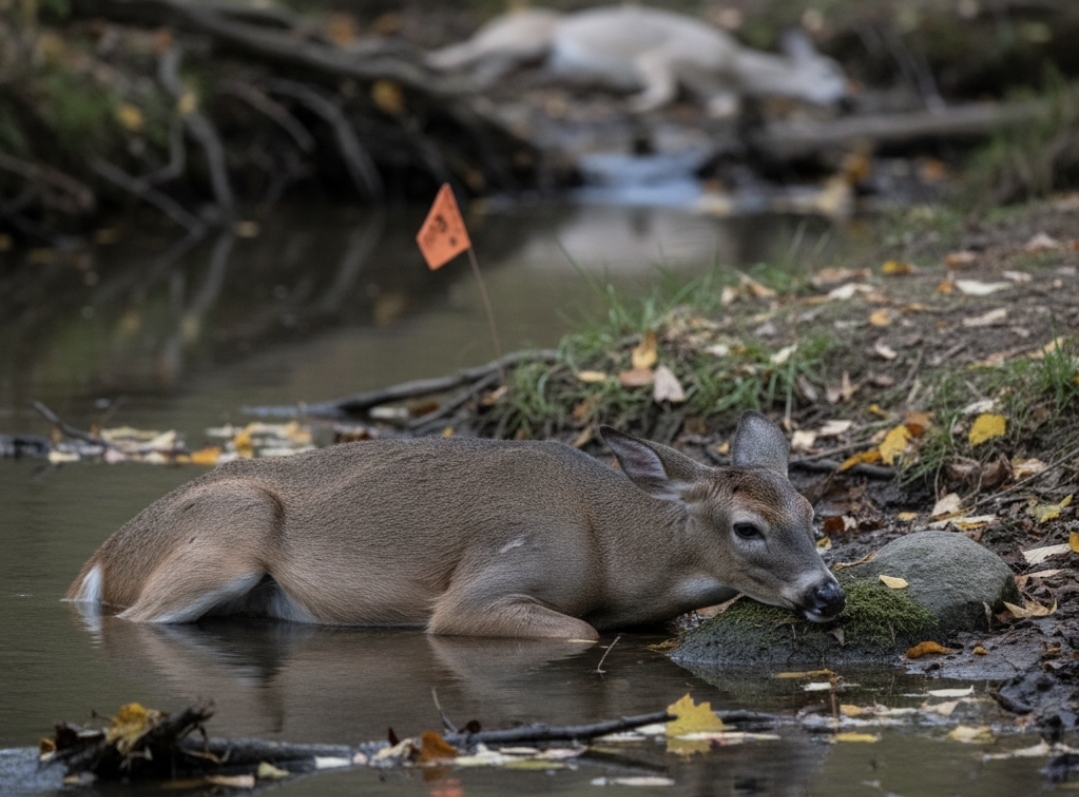
Reports of sick and dead deer submitted by the public to the ODW have skyrocketed to over 8,700 this year, up sharply from just over 2,000 in 2024.

EHD Outbreak Decimates Local Herds
The primary driver of the spike is Epizootic Hemorrhagic Disease (EHD), a viral disease transmitted by biting midges, or “no-see-ums.”

“This year’s outbreak of EHD is a little unprecedented,” said Lindsey Krusling of the Ohio Division of Wildlife, attributing the severity to what she called “the perfect storm” of a rainy spring followed by a hot, dry summer that favored midge proliferation.
EHD causes deer to develop a high fever and become disoriented, often driving them toward water to cool off before dying, which is why carcasses are frequently found in or near creeks and rivers.

Economic Fallout and Response:
* In response to the severe localized die-offs, particularly in southeastern Ohio, the ODW is proposing to reduce the deer bag limit from three to two in Athens, Meigs, and Washington counties, effective December 1st.
* While EHD outbreaks are typically short-lived, ending with the first hard frost that kills the midges, the impact on local hunting outfitters and businesses dependent on the fall hunting season could be significant. Scientists, however, suggest that populations generally rebound within three to five years.

CWD: A Lingering and Fatal Threat
Meanwhile, Chronic Wasting Disease (CWD), a fatal neurological disorder caused by abnormal proteins (prions), continues its slow, inexorable spread. The ODW confirmed 24 positive cases during the last hunting season in five counties, expanding the established Disease Surveillance Areas (DSA) in parts of central and northwest Ohio.
Unlike EHD, CWD prions persist in the environment through bodily fluids, making it a permanent landscape threat once established. The ODW maintains a ban on baiting and feeding deer within CWD surveillance zones to reduce the congregation of animals and slow transmission.
Water Safety Concerns Raised
The discovery of numerous EHD-infected deer carcasses near waterways has raised public health concerns in communities that rely on local water sources.
While the ODW is clear that neither EHD nor CWD is known to be transmissible to humans, the discovery of dead animals in or near water sources is a visual and hygienic concern.
ODW officials continue to advise the public:
* Do not consume any deer that appears sick or is found dead. Hunters in CWD surveillance areas are encouraged to use the free testing services provided by the ODW.
* Report any sick or deceased deer to the Ohio Division of Wildlife to help track the distribution and severity of the outbreaks.
The ODW will continue to monitor the situation, with the hope that a sustained cold front will bring an end to the debilitating EHD outbreak, while simultaneously expanding its long-term strategy to manage the slowly encroaching CWD threat.