


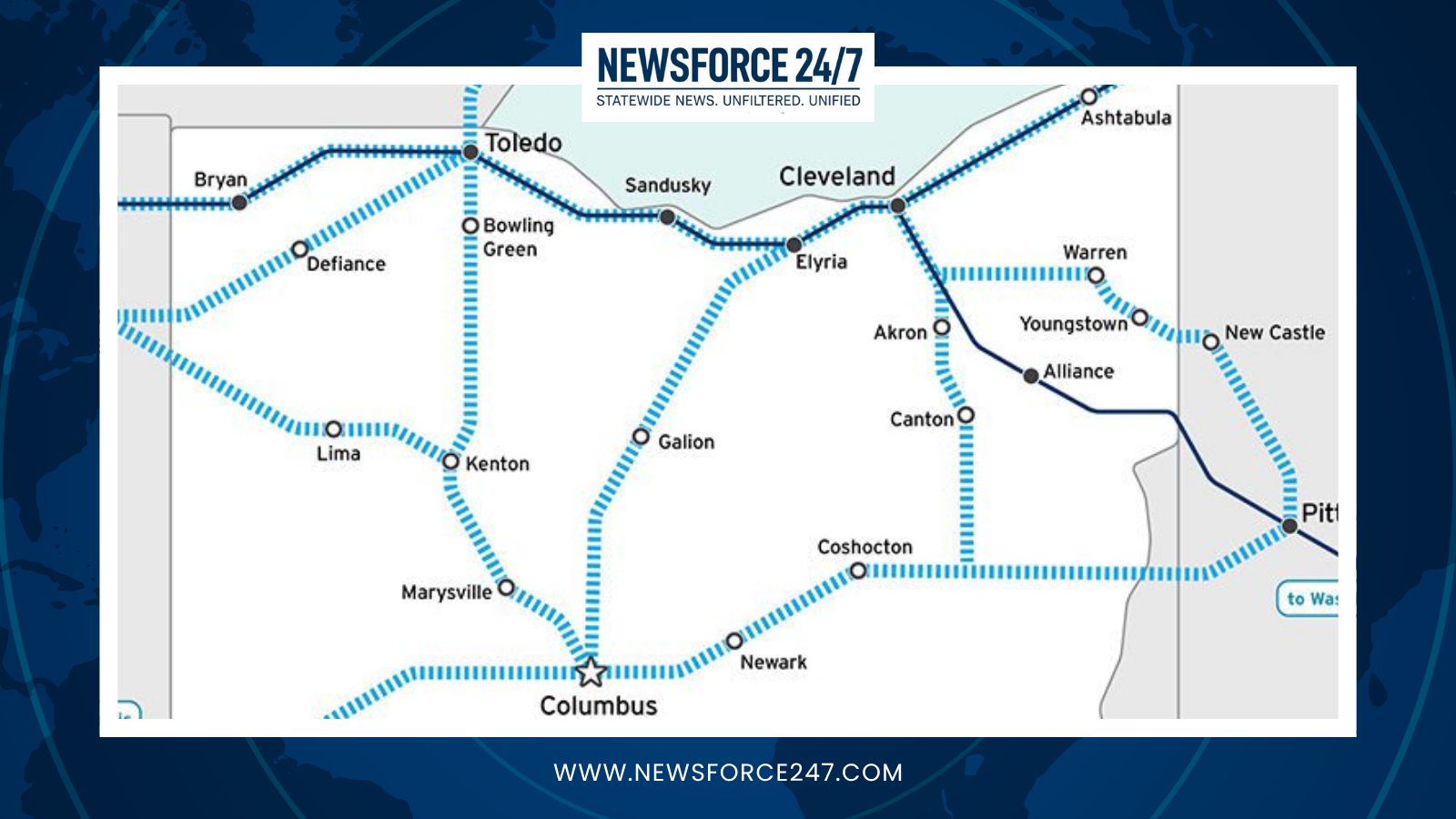
TOLEDO, Ohio – Advocacy for restoring passenger rail service between Cleveland, Toledo, and Detroit is picking up speed, as regional planners and transportation officials prepare to seek new rounds of federal funding to move the project into the design phase.

The proposed corridor, part of a broader push to expand Midwest intercity rail, has drawn renewed attention from local governments, advocacy groups, and economic development organizations who say the line could strengthen cross-state connectivity and reduce highway congestion along the Interstate 80 and 90 corridor.
Officials with the Toledo Metropolitan Area Council of Governments (TMACOG) said Tuesday that they are exploring opportunities under the Federal Railroad Administration’s (FRA) Corridor Identification and Development Program, which provides technical assistance and grant funding for passenger rail projects in early planning stages.

“This is a critical point in the process,” said Sandy Spang, TMACOG’s transportation director. “The federal programs now in place give us a real path forward to take a concept and start developing an actual design.”
Advocates envision a corridor that could connect Cleveland to Detroit with stops in Elyria, Sandusky, Toledo, and Ann Arbor, serving major population centers and university communities along Lake Erie. Regional rail supporters say the plan aligns with Amtrak’s 2035 expansion vision announced in 2021, which listed the route as a candidate for restored or expanded service.

The project’s potential also ties into Ohio’s participation in the Midwest Regional Rail Plan, a multi-state strategy to improve passenger rail frequency and speed across the region. Planners say studies will look at estimated ridership, infrastructure needs, and economic impacts on local communities.
State leaders in both Ohio and Michigan have voiced support for increased passenger rail investment, though officials acknowledge the project faces a lengthy timeline, complex coordination between two states, and funding challenges beyond the design phase.

Even so, rail advocates across northern Ohio believe the project’s growing momentum could signal a shift in how the region moves people and goods in the decades ahead.