



A sentence without a body

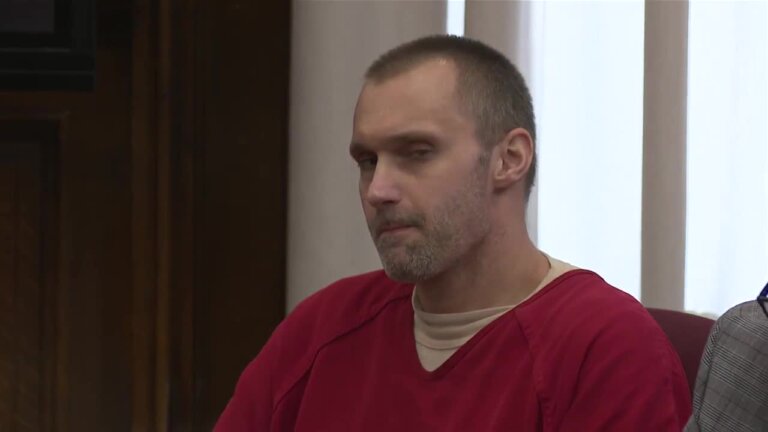
On Jan. 5, 2026, Huron County Common Pleas Judge James Conway sentenced 42-year-old Frederick “Fred” Reer of Townsend Township to 14 years in state prison for his role in Dean’s 2017 death and disappearance. Reer had pleaded guilty in December to involuntary manslaughter, two counts of tampering with evidence and gross abuse of a corpse—charges that replaced an initial murder count as part of a plea deal.
Ohio Attorney General Dave Yost, whose office handled the prosecution, framed the outcome starkly. “With today’s sentence, a killer has been brought to justice,” he said, adding that he hoped Dean’s family would find “a measure of peace” knowing the man responsible is behind bars. Yet with no body ever recovered and no precise cause of death determined, the case occupies a fraught space between closure and enduring mystery.

The day Amanda disappeared
Amanda Dean, a 36-year-old mother of four, was last seen on July 11, 2017, in Townsend Township, just outside Norwalk, where she lived with Reer. Family members reported her missing that same day, telling the Huron County Sheriff’s Office they feared Reer had killed her inside an outbuilding on the rural property the couple shared.

For years, Dean was a name on flyers and social media pages, a smiling face anchored to the words “missing mother” and “still not found.” Her son Joshua launched a Facebook page, “(The Official) Help Find Amanda Dean (Family Page),” pleading online: “I’m just a boy looking for his mother,” a public cry that would ultimately help draw new eyes to a stalled investigation. Behind those posts were years of dread, suspicion and frustration as Dean’s loved ones watched the case languish without an arrest.
A violent relationship, ignored warnings

Even before she vanished, Dean had left a trail of warnings about the man she was living with. Prosecutors presented text messages in which Dean told friends that if she ever “went missing,” they should look to Reer. Friends and relatives described the relationship as volatile and abusive, recounting injuries that Dean attributed to beatings by Reer.
In one documented incident, sheriff’s deputies were called to the property months before Dean disappeared and observed her with a black eye. She declined to press charges, and officers left without interviewing Reer or formally documenting an assault, a missed intervention point that advocates and family members now see as emblematic of a system that repeatedly failed a woman in danger. As one family member later told the court, each time Dean returned to Reer, the risk escalated.
The years of drift and a citizen investigator
Despite early suspicions focusing on Reer, the investigation into Dean’s disappearance drifted for more than five years, a period during which the case was effectively derailed. It was not until Feb. 9, 2024, that a grand jury finally indicted Reer, following a renewed probe by the Ohio Bureau of Criminal Investigation (BCI) and the Attorney General’s Special Prosecutions Section.
Behind that renewed momentum was an unlikely figure: Tracy Thom, a businesswoman, mother and self-styled victims’ advocate who reached out to Joshua Dean after seeing his Facebook plea in October 2022. Thom began digging into the case, combing records, interviewing people around the couple and eventually unearthing information that she says should have been discovered years earlier. Her reporting and advocacy helped spur fresh scrutiny of law enforcement’s earlier handling of Dean’s disappearance and applied public pressure that coincided with BCI’s deeper involvement.
Thom’s work also underscored a troubling question that still lingers in local communities: how many potential red flags around Reer were missed between 2017 and 2023 while the investigation stalled. In online forums, some community members have speculated about whether Reer’s circle intersects with other disappearances, though no additional charges have been filed.
What investigators say happened
When state investigators finally took a comprehensive look, they concluded that Dean never left the property alive. According to the Attorney General’s Office and BCI, Reer killed Dean inside the residence they shared, cleaned up the crime scene and disposed of key evidence.
Because Dean’s body has never been found, investigators say they cannot pinpoint an exact cause or manner of death. However, authorities told the court they believe that after killing her in early July 2017, Reer dismembered and burned Dean’s remains, likely disposing of them in or near a Huron County waterway. A corrections officer later reported overhearing Reer on a video call saying, “There is no body because I disposed of it,” a quote prosecutors used to argue that his concealment efforts were deliberate and calculated.
Inside the plea deal
The case appeared headed for trial in early 2026 when Reer changed course, entering guilty pleas on Dec. 8, 2025, to reduced charges. The murder count was dropped, replaced by involuntary manslaughter, with additional counts for tampering with evidence and gross abuse of a corpse. In court, prosecutors said the plea spared Dean’s family from reliving painful evidence in a trial that still would have unfolded without the certainty of a body.
Defense attorney Anthony Rich argued that the plea showed Reer’s acceptance of responsibility and asked for a sentence in the “single-digit” range of years. He cited his client’s cooperation after indictment and suggested that the legal outcome should reflect manslaughter rather than an unproven murder theory. But prosecutors countered that Reer’s efforts to erase Amanda Dean—from the crime scene to the burial site—warranted consecutive sentences at the higher end of the range.
Judge Conway ultimately stacked the prison terms for each offense rather than allowing them to run concurrently. Court records show the breakdown as nine years for involuntary manslaughter, two years on each tampering count, and one year for gross abuse of a corpse, for a total of 14 years. Under Ohio law, Reer may be eligible for a modest reduction—up to about 8%—for earned good behavior and will serve two to five years of post-release control after leaving prison.
A family speaks, and grieves
Before sentencing, Judge Conway said he had reviewed 18 victim impact statements, including emotional letters from Dean’s mother, sister and her son Joshua. Dean’s relatives filled the courtroom gallery, clutching photographs of Amanda laughing with her children and smiling in better times, images they held up silently as the sentence was read.
One family member wrote that Reer had “robbed me of the love I could have gotten from her,” a line that captured the generational damage inflicted on Dean’s four children. Joshua, now a young adult, condemned what he described as Reer’s lack of genuine remorse and lamented that his mother “is never going to see her grandkids.” Speaking at a news conference after the hearing, family members alternated between gratitude for the eventual prosecution and anger at how long it took.
“We had to turn into investigators just to get anyone to listen,” one relative said, thanking Thom by name for refusing to let the case fade. They also called for reforms in how rural agencies handle domestic violence and missing-person reports, arguing that Dean’s case shows what happens when warnings from abused women are not taken seriously.
System failures and unanswered questions
The Dean case has become a flashpoint in wider debates over law enforcement accountability, domestic violence response and transparency in Ohio. Thom and other advocates have pressed Attorney General Yost’s office to release investigative records, arguing that public access is necessary to understand what went wrong in the early years of the probe and to examine whether other cases might be connected. Yost’s office has so far resisted broad disclosure requests, citing ongoing investigative interests and privacy issues, a stance that has fueled criticism among open-records advocates.
The timeline raises uncomfortable questions: For more than five years after Dean went missing, the man now convicted in connection with her death remained free in the community. Online, some local residents have openly speculated about whether others who disappeared or died under suspicious circumstances in the region might be linked to Reer, though prosecutors have not confirmed any additional investigations. The suggestion—half rumor, half fear—is that Amanda Dean’s case may not be an isolated tragedy but the only one so far brought into court.
What is clear is that Dean’s disappearance emerged from a pattern of escalating abuse, visible not only in hindsight but documented in texts, police visits and the bruises her family witnessed. Whether the lessons of that pattern will translate into policy changes—quicker escalation of missing-person cases involving domestic violence, mandatory follow-up when visible injuries are present, closer coordination between local sheriffs and state investigators—remains uncertain.
For Amanda Dean’s family, the 14-year sentence is both something and not nearly enough. They leave the courthouse without a grave to visit, without answers about her final moments, carrying only a conviction and the hope that the system that failed her in life might yet learn from her death.