


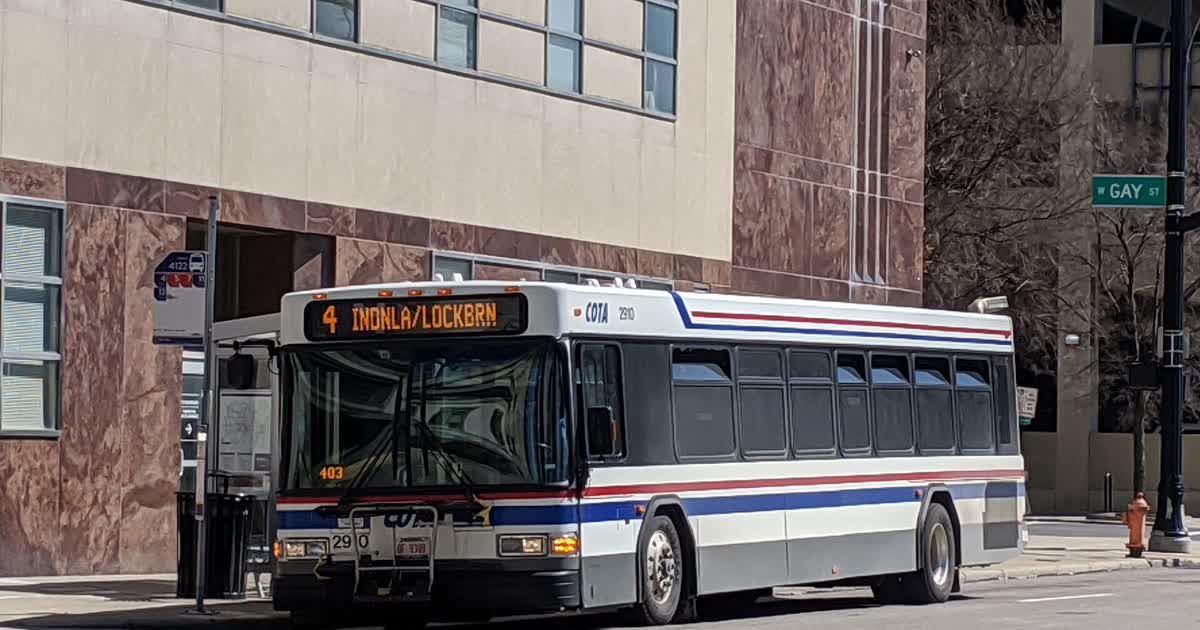
COLUMBUS — The Central Ohio Transit Authority has released its first-ever Customer Experience Action Plan, a multi-year effort released Oct. 14 that aims to make buses show up more reliably and make riding them a better experience.
COTA said the plan makes it one of only eight transit agencies in the United States with a customer experience plan of this kind. It arrives after a difficult year for reliability, in which the agency missed roughly 32,000 trips through August, meaning about 6.4 percent of scheduled buses never arrived during the first two-thirds of the year.

Agency leadership has attributed those missed trips in part to underperforming electric buses and to other buses being held off the road for maintenance. For riders, the result is the same regardless of cause: a bus that does not come can mean a late arrival at work, school, or a medical appointment.
The plan organizes the response into 33 action items. Together they are intended to strengthen reliability and on-time performance, improve stops, transit centers and vehicle conditions, deliver clearer and timelier service information, simplify trip planning and fare payment, modernize accessibility and booking tools, and expand access to COTA service.

Specific steps include better real-time tracking of bus detours, more digital signs at bus stops, cleaner and more functional bus interiors, improved video and audio announcements on board, better tracking of customer complaints, new ticket vending machines, and increased safety measures. The agency also wants a simpler, digital application process for its reduced fare program.
Chief Executive Officer Monica Téllez-Fowler said riders count on COTA to reach jobs, classes, appointments and their communities, and that they deserve service that respects their time. The plan frames that expectation as the standard against which the coming changes should be judged.

The effort is not limited to vehicles and stops. COTA also plans new work with its own employees, including additional training, mental health support, and a ridership program for non-union employees, on the theory that the rider experience starts with the people delivering the service.
Riders will be able to judge progress by the basics the plan targets: whether detour information is accurate, whether stops and buses are cleaner, and above all whether the scheduled bus arrives. COTA has now put those goals in writing; the action items give Central Ohio a checklist to measure it against in the years ahead.
