


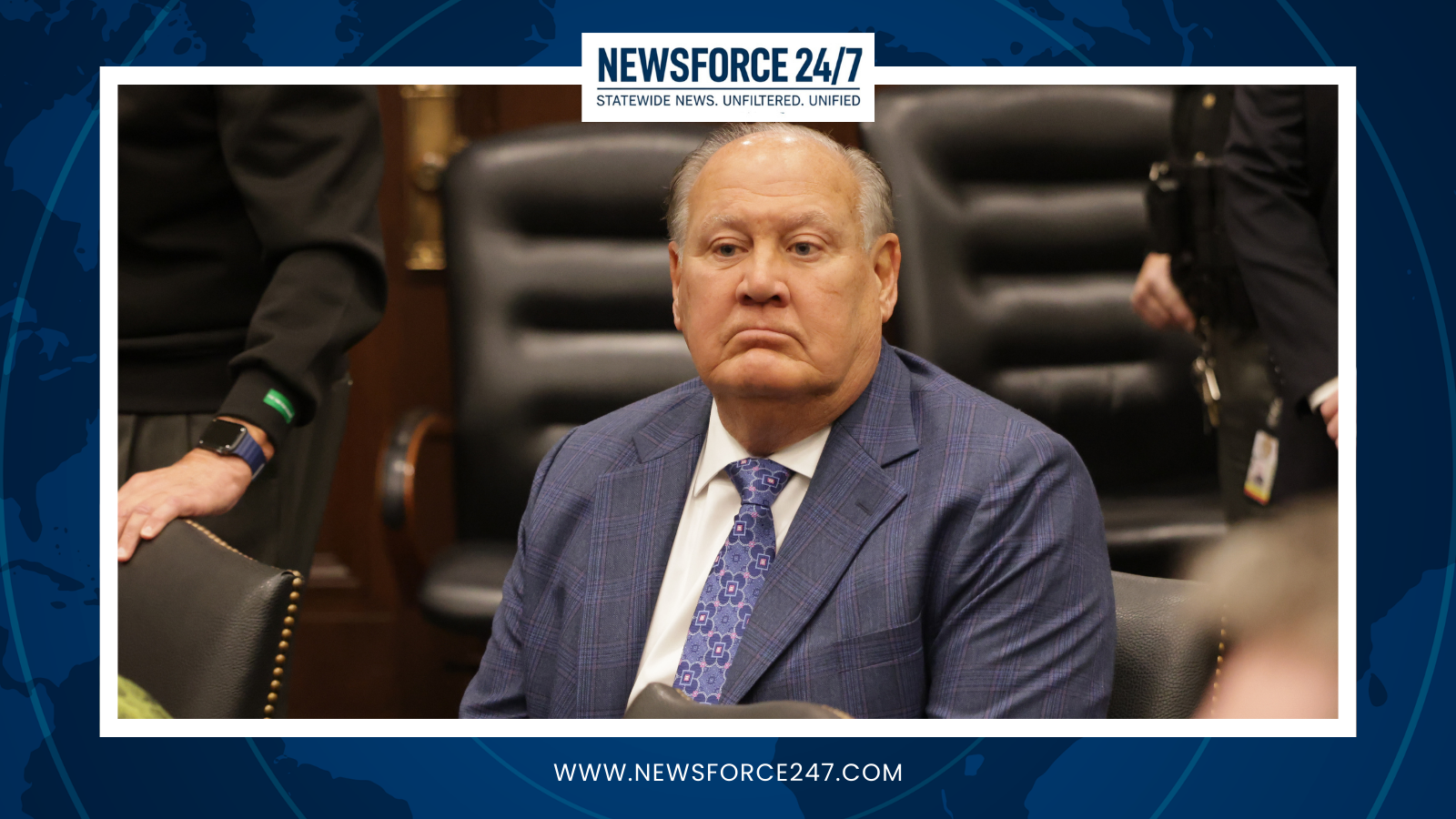

Former FirstEnergy CEO Chuck Jones faced new scrutiny in an Akron courtroom this week as jurors saw internal emails showing he moved to cash out millions in company stock for a Florida retirement home in the months after Ohio’s nuclear bailout law took effect. The evidence came as the state continues to press its case that Jones helped orchestrate one of the largest public corruption schemes in Ohio history around House Bill 6, the controversial 2019 energy bailout.
New emails on $10 million stock plan
Prosecutors presented an April 2020 email in which Jones told his financial adviser he had informed FirstEnergy’s board he planned to sell 200,000 company shares once the stock hit $50, a sale he estimated at about $10 million before taxes. In the message, Jones wrote that the proceeds would be set aside in a highly liquid account as he and his wife prepared to purchase their “ultimate retirement home” in Naples, Florida.

Jones calculated that the transaction would leave him with just under $30 million in remaining FirstEnergy holdings and asked for help reducing what he estimated as a roughly $400,000 tax bill on the sale, according to the email shown to jurors. The stock price ultimately never reached his $50 target during the time period at issue, and the sale was not executed, a stipulation the judge read to the jury.

Ties to House Bill 6 and alleged scheme
The new financial evidence is being used to bolster the state’s narrative that Jones personally stood to benefit as FirstEnergy secured a massive, ratepayer-funded rescue for its struggling nuclear fleet through House Bill 6. The law, passed in 2019, directed about $1 billion over a decade to two nuclear plants formerly owned by a FirstEnergy subsidiary, support that prosecutors say was central to the company’s strategy to boost its share price.
Assistant Ohio Attorney General Matt Meyer has told jurors that Jones and former FirstEnergy Senior Vice President Michael Dowling paid a $4.3 million bribe to then–Public Utilities Commission of Ohio Chair Sam Randazzo as an “insurance policy” to ensure favorable regulatory decisions around the time HB 6 was moving through the legislature. Prosecutors argue that Randazzo, a longtime energy lawyer, used his position and influence to help advance the bailout and shield the company from a rate review that investors feared could hurt earnings.

Defense says payment wasn’t a bribe
Jones and Dowling have pleaded not guilty to state corruption charges, including bribery, money laundering and engaging in a pattern of corrupt activity, and they have also been charged in a separate federal racketeering case. Defense attorneys say the $4.3 million payment to Randazzo was not a bribe but a resolution of a prior consulting and settlement agreement tied to industrial customers, and they contend Randazzo later stole the money from those clients for his own benefit.
In opening statements, defense lawyers also argued that Jones and Dowling did not want Randazzo appointed as PUCO chair and instead favored a different candidate, portraying the payment as part of a years‑old business arrangement rather than an illicit quid pro quo. They have sought to distance Jones’ personal finances and compensation package from the political and regulatory maneuvering around HB 6, even as prosecutors emphasize that much of his pay was incentive-based and rose significantly as the company’s position improved.

Trial expected to stretch into next month
The Summit County Common Pleas Court trial, which began with jury selection in late January, is expected to continue well into March as prosecutors call a slate of current and former FirstEnergy insiders, regulators and political figures. The case is one of several arising from a $60 million bribery scheme that has already led to federal convictions of former Ohio House Speaker Larry Householder and former Ohio Republican Party Chair Matt Borges in connection with efforts to push HB 6 through the General Assembly.
FirstEnergy itself admitted in a 2021 deferred prosecution agreement that it paid bribes to Randazzo and Householder, agreeing to pay $230 million and to cooperate with investigators, and it has since paid hundreds of millions more to settle shareholder and state actions. As the Akron trial continues, the newly aired emails linking Jones’ contemplated $10 million stock sale to a Florida home purchase give jurors a closer look at how prosecutors say the alleged scheme translated into potential personal gain for the company’s former top executive.news.