


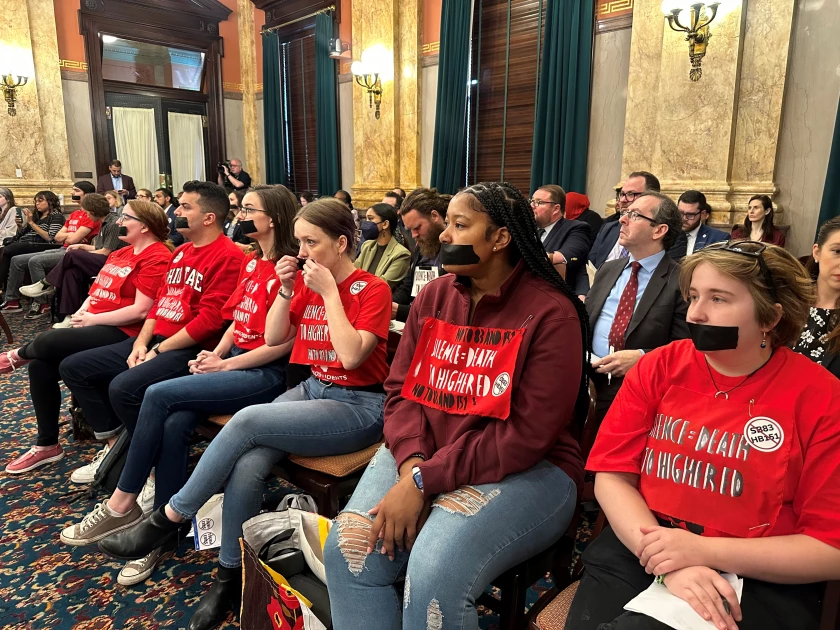

Senate Bill 1, known as the *Ohio Higher Education Enhancement Act*, was signed into law March 28, 2025, and went into effect June 26. The law bars public colleges and universities from taking positions on “controversial beliefs or policies” — a category broadly defined to include topics such as climate change, electoral politics, foreign policy, and diversity, equity, and inclusion programs. It also eliminates DEI-based hiring, training, and scholarships.

Campus Policy Changes
At Ohio State University, administrators revised signage standards and banned sidewalk chalking over the summer, citing persistent complaints and time spent reviewing messages. Residence hall common areas are now limited to university-branded decorations, a policy that some students say stifles free expression.

At Miami University, members of the student association report that some professors have become more hesitant to discuss sensitive topics in class, uncertain how far the law’s restrictions extend. The ambiguity around what qualifies as “controversial” has left both students and faculty uneasy about compliance.
Faculty and Recruiting Concerns

Faculty members across Ohio are voicing similar concerns. An Ohio University professor said the legislation could have a chilling effect on teaching, warning that instructors may self-censor to avoid potential backlash. Some faculty members worry that the law could hurt Ohio’s ability to attract top educators and researchers, potentially weakening the state’s academic competitiveness.
DEI Centers Closed

The law’s impact extends beyond the classroom. Several diversity-focused centers have closed their doors. At the University of Cincinnati, the words “African American” were removed from the African American Cultural and Resource Center, a facility that has served students since 1991. Centers serving women and LGBTQ+ students also shuttered following the law’s enactment.
In response, alumni have formed the nonprofit *Cincy Cultural Resource Center Foundation* to provide independent funding for mentorship, educational, and cultural programs. The university’s Tyehimba Black Graduation Celebration has been relocated off campus, and a student-led welcome for incoming Black students replaced the university-sponsored event.
Long-Term Effects Uncertain
As Ohio campuses complete their first semester under the new law, reactions remain divided. Critics say the changes silence marginalized voices and erode campus communities built over decades. Supporters view the legislation as a step toward keeping higher education politically neutral.
For now, both students and faculty are adjusting to an evolving academic environment — one that may redefine what it means to speak freely and teach openly in Ohio’s public universities.