



Among the proposals are House Bills 26 and 200, which would require state and local officials to cooperate with federal immigration enforcement or risk losing budget funding. House Bill 42 would direct hospitals and schools to report the citizenship status of patients and students, while House Bill 282 would add immigration status to the list of factors judges may consider at arraignment or sentencing.

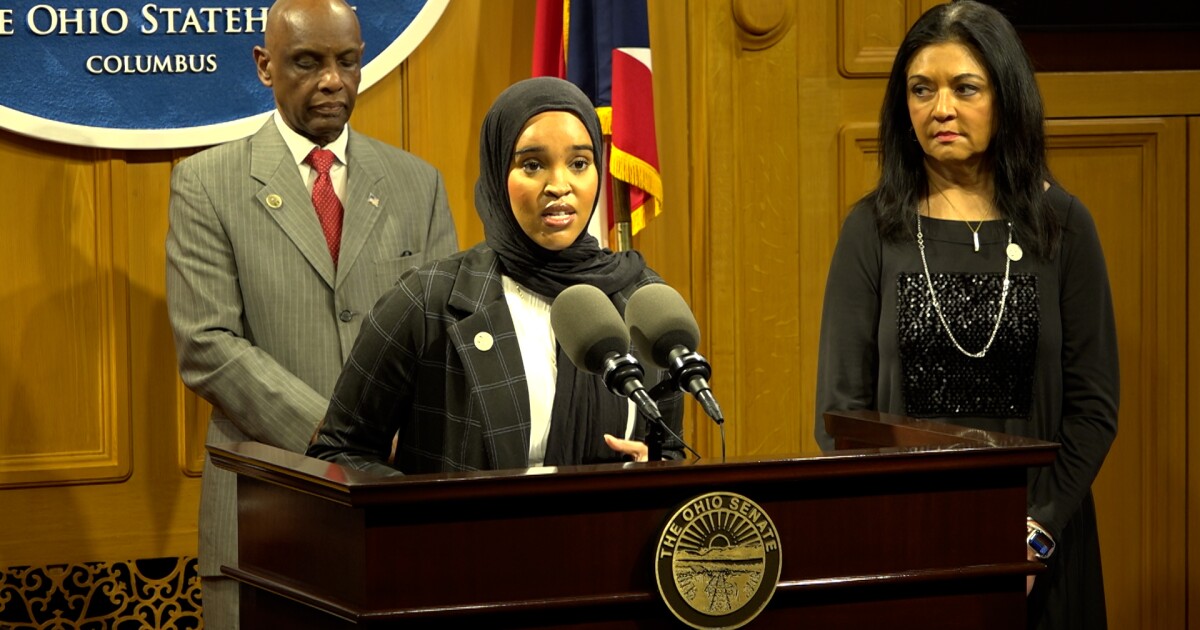
Rep. Munira Abdullahi, D-Columbus—the first Somali-American and first Muslim woman to serve in the Ohio legislature—said she’s concerned about the measures.
“Right now, those bills are effectively paused,” Abdullahi said. “I’m really hoping that this increased pressure, increased temperature doesn’t bring that energy back to the Statehouse, where they’re moving those bills.”
Abdullahi said Democrats are often forced to play defense on legislation like this. “We’re always constantly trying to stop bad things from happening,” she said. “We don’t ever have time to do good things, so that’s where we’re at, unfortunately. But I’m hoping those bills stay where they’re at and don’t move.”

Most of the bills have had only one hearing so far, but immigration is expected to be a major campaign issue this year. Abdullahi singled out House Bill 1, which she called “crazy,” as one Republicans are prioritizing. The bill would prevent governments and individuals from countries deemed U.S. adversaries from owning land in Ohio. It has broad Republican support, plus four Democratic co-sponsors.
The measure was amended in November after dozens of Chinese immigrants in Ohio testified against it earlier in the year. The updated version exempts U.S. citizens, lawful permanent residents or “green card” holders, and current or retired members of the military.

Another measure directed at so-called “sanctuary cities” passed the Senate along party lines in June. Senate Bill 172 would require state and local officials to allow the arrest or detention of anyone suspected of being in the country unlawfully, and would override any local policies that conflict with the rule. The bill now awaits action in the House.
No Ohio cities are officially designated as “sanctuary cities,” according to a U.S. Department of Justice list released last summer. However, communities including Columbus and Oberlin have adopted local ordinances that limit cooperation with federal immigration authorities.
