



State warns of breached agreement

In a November 24 letter to Mayor Shammas Malik, State Historic Preservation Officer Diana Welling wrote that it had come to her office’s attention that Akron might not be able to uphold key terms of a 2024 Memorandum of Understanding covering Firestone Plant #1. That agreement, signed August 8, 2024, cleared the way for state approval of demolition but explicitly required the city to preserve the plant’s front‑facing clock tower and incorporate it into any new construction on the site.
Under the pact, Akron also agreed to retain a portion of the eastern‑most building on the property and to justify in writing why other sections would need to be removed, with those justifications subject to state review. Welling’s letter gave the city 30 days to present “a plan and commitment” explaining how it would resolve the dispute and fulfill its preservation responsibilities for the Firestone clock tower.

Iconic tower on the line
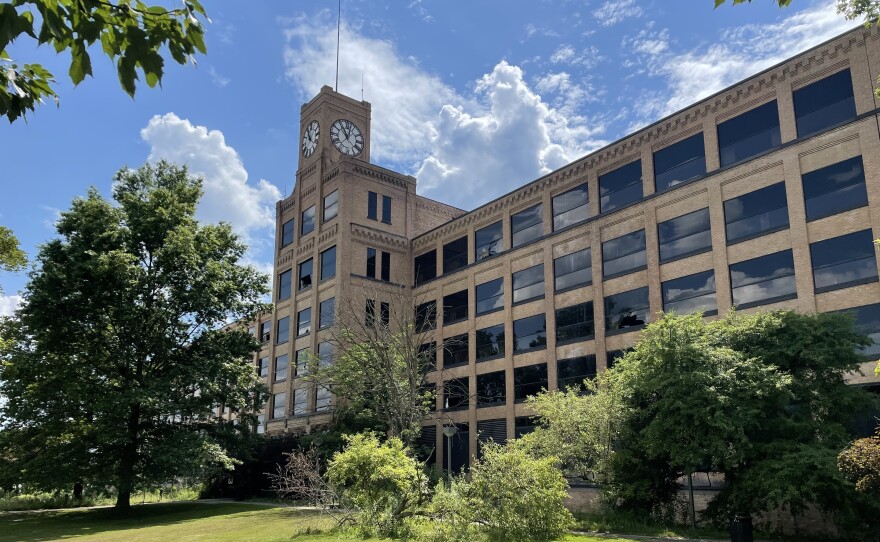
Firestone Plant #1, at 1200 Firestone Parkway, is listed on the National Register of Historic Places and is widely recognized for its front façade and soaring clock tower, a visual anchor for the surrounding Firestone Park neighborhood. Preservation advocates argue the tower is more than a nostalgic relic, describing it as a marker of Akron’s industrial identity and a symbol of the once‑dominant Firestone Tire and Rubber Company.

“The clock tower itself anchored all of Firestone Park,” said Dana Noel, advocacy chair for the group Progress Through Preservation, who has pushed the city for months to keep at least the tower and a portion of the plant’s front. “If you tear it down, you’re severing the cultural and historic connection to Firestone.”
Clash over cost, safety and vision

City officials have argued that preserving the front of the building, including the tower, is prohibitively expensive and potentially risky. A planning department report cited in public meetings put the low bid to separate and secure the front section at more than 12 million dollars, compared with just over 7 million dollars to demolish the entire structure.
Engineers told Akron’s Urban Design and Historic Preservation Commission that keeping only the eight‑story clock tower without the rest of the façade was not structurally feasible, pointing to the age and condition of the reinforced‑concrete complex. Commission members, however, said the plant’s structural problems were comparable to those of other early‑20th‑century industrial buildings that have been successfully reused elsewhere.
Local officials and public pressure
The state’s intervention comes after months of local debate. Last summer, Akron’s historic preservation commission rejected a proposal to raze the entire plant, insisting that the façade and tower remain, even as it allowed demolition of the rear three‑quarters of the complex under an earlier compromise.
City Council later overturned the commission’s stance and granted a broader demolition request, but council members have publicly urged the Malik administration to spare the clock tower or at least its clock face. On December 15, council voted unanimously to ask the administration to explore alternatives to save the structure, though it is unclear whether members were aware at the time that the state preservation office had already raised formal objections.
Funding and future of the site
The Memorandum of Understanding with the State Historic Preservation Office is a key condition for the Ohio Department of Development to release demolition funds tied to Firestone Plant #1. Welling warned that if Akron fails to resolve the dispute, her office would terminate the agreement and report the breach, potentially jeopardizing state money the city has said it needs to clear the site.
In a statement, Welling said the state has granted Akron a limited extension to craft “an alternative mitigation proposal” that would address the loss of the clock tower if it cannot be saved, and has encouraged the city to work with its Urban Design Review Commission. Preservation advocates, meanwhile, caution that if the agreement collapses and funding is withdrawn, Akron risks not only losing money but also erasing a defining landmark of its industrial past.