


The Minneapolis shooting

The protests stem from the fatal shooting of a 37‑year‑old woman in Minneapolis on Wednesday during an ICE operation on a residential street. Witness and official accounts differ sharply: federal officials say the woman used her vehicle as a weapon against an agent, while local leaders who reviewed video footage have publicly questioned the self‑defense claim and accused ICE of excessive force. The killing occurred amid what federal authorities have described as one of ICE’s largest enforcement operations in recent years, further inflaming tensions over immigration policing.
Toledo’s demands

In Toledo, dozens of people gathered outside a federal building to call for what they described as strict limits on ICE activity in their city. Speakers urged local officials to restrict cooperation with federal immigration agents, demand full transparency in use‑of‑force incidents, and press for the public release of the ICE officer’s identity in the Minneapolis case. Some protesters also called for broader measures, including ending large‑scale deportation operations and exploring “sanctuary” protections at the city or county level.
Echoes in Akron and Columbus

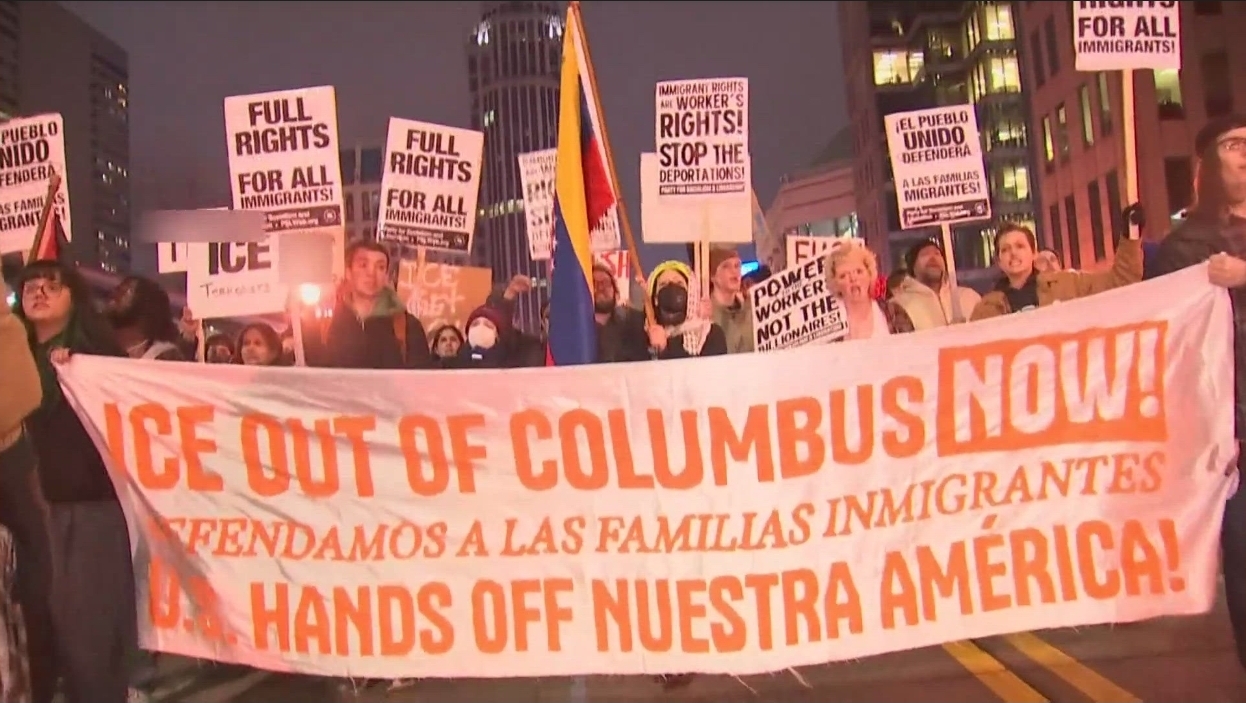
The Toledo action mirrored protests earlier in the day in Akron and Columbus, where demonstrators held vigils and marches denouncing the shooting and chanting the name of the woman killed in Minneapolis. Organizers in those cities framed the incident as part of a broader pattern of aggressive federal immigration tactics, linking it to past controversies over raids and detention practices. Activists coordinating across the three Ohio cities said they expect more actions in the coming days, including calls for state lawmakers to hold hearings on ICE operations and their impact on local communities.
National response and political fallout

The Minneapolis shooting has quickly escalated into a national flashpoint, drawing sharply contrasting responses from federal and local officials. Senior figures in the Trump administration have defended the ICE agent’s actions as justified and “defensive,” while city leaders in Minneapolis have urged ICE to scale back or end its presence there, arguing that the agency is undermining public safety. Civil rights and immigrant advocacy groups say the growing chain of protests—from Minneapolis to Milwaukee, Seattle, Chicago and now Toledo—reflects deep public mistrust of ICE and a renewed push to rein in the agency’s authority.